
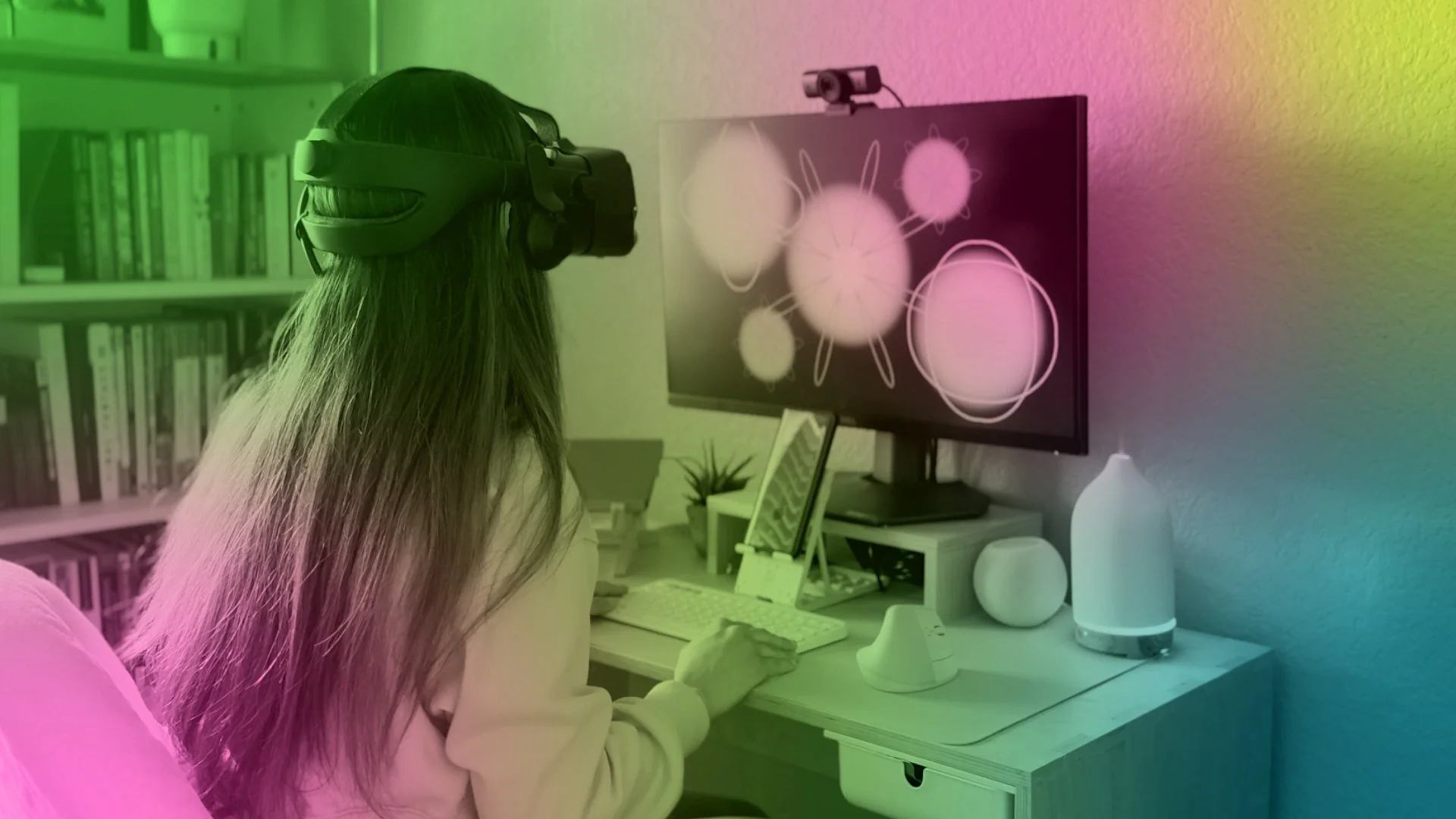
Mindful Symbiotic Ecosystem
Categories:
Women continue to be underrepresented in leadership roles, despite increasing participation in the workforce. Those who do reach leadership positions often face burnout, isolation, and pressure to meet unrealistic expectations shaped by traditional leadership models.
The question is not about capability, it’s about sustainability!.
The workplace is shifting.
As remote and hybrid work become the norm, this is a critical moment to design systems that actively support women in leadership and move toward more inclusive, human-centered models.
OUTCOMES NEEDED
For women in leadership:
Sustainable ways to manage energy and prevent burnout
Tools that support reflection, confidence, and decision-making
Community, mentorship, and psychological safety
For organizations:
Long-term sustainability through healthier leadership practices
Increased retention and growth of women leaders
More inclusive decision-making that reflects diverse perspectives
Role: Design Lead and Researcher
Technique: UX/UI Design
Adobe illustrator
Adobe Photoshop
Adobe inDesign
After Effects
Figma
Keynote
Additional Credits: Research, design, prototyping, and system development by Andrea Hardin
Advising and critique support by Bree McMahon, Marty Maxwell, and Jessica Miles
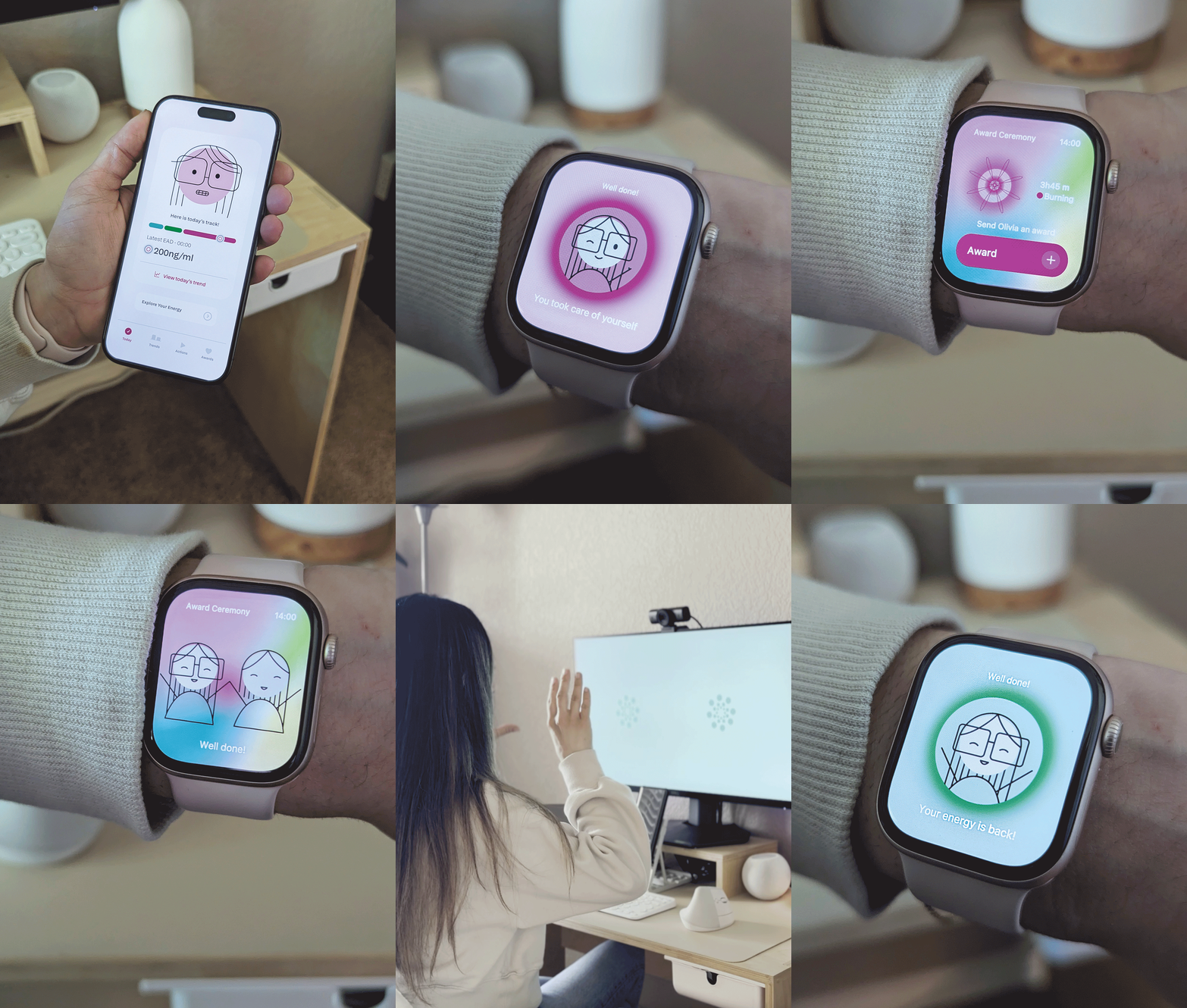
The following structures touchpoints allow me to identify gaps, refine ideas, and continuously strengthen both the conceptual and visual integrity of the project.
-
This project was developed as part of my thesis, with guidance from a multidisciplinary advisory team:
Bree McMahon — Thesis Chair, supporting research direction and critical framing
Marty Maxwell — Exploration Advisor, guiding conceptual development and experimentation
Jessica Miles — Visual Design Advisor, supporting visual coherence across the system
-
led the project end-to-end as the designer and researcher, responsible for:
Conducting qualitative research and synthesizing insights
Defining the problem space and identifying opportunity areas
Designing and prototyping multiple interventions (digital and physical)
Exploring emerging technologies and interaction models
Iterating on concepts through continuous testing and feedback
Translating complex ideas into cohesive system-level design solutions
-
I worked in close collaboration with my advisors through an iterative process:
Weekly sessions with my Thesis Chair to refine research direction, insights, and framing
Bi-weekly critiques with my Exploration Advisor to expand concepts and challenge assumptions
Monthly reviews with my Visual Design Advisor to ensure clarity, consistency, and alignment across all design outputs
🧠 Thinking & Decision-Making
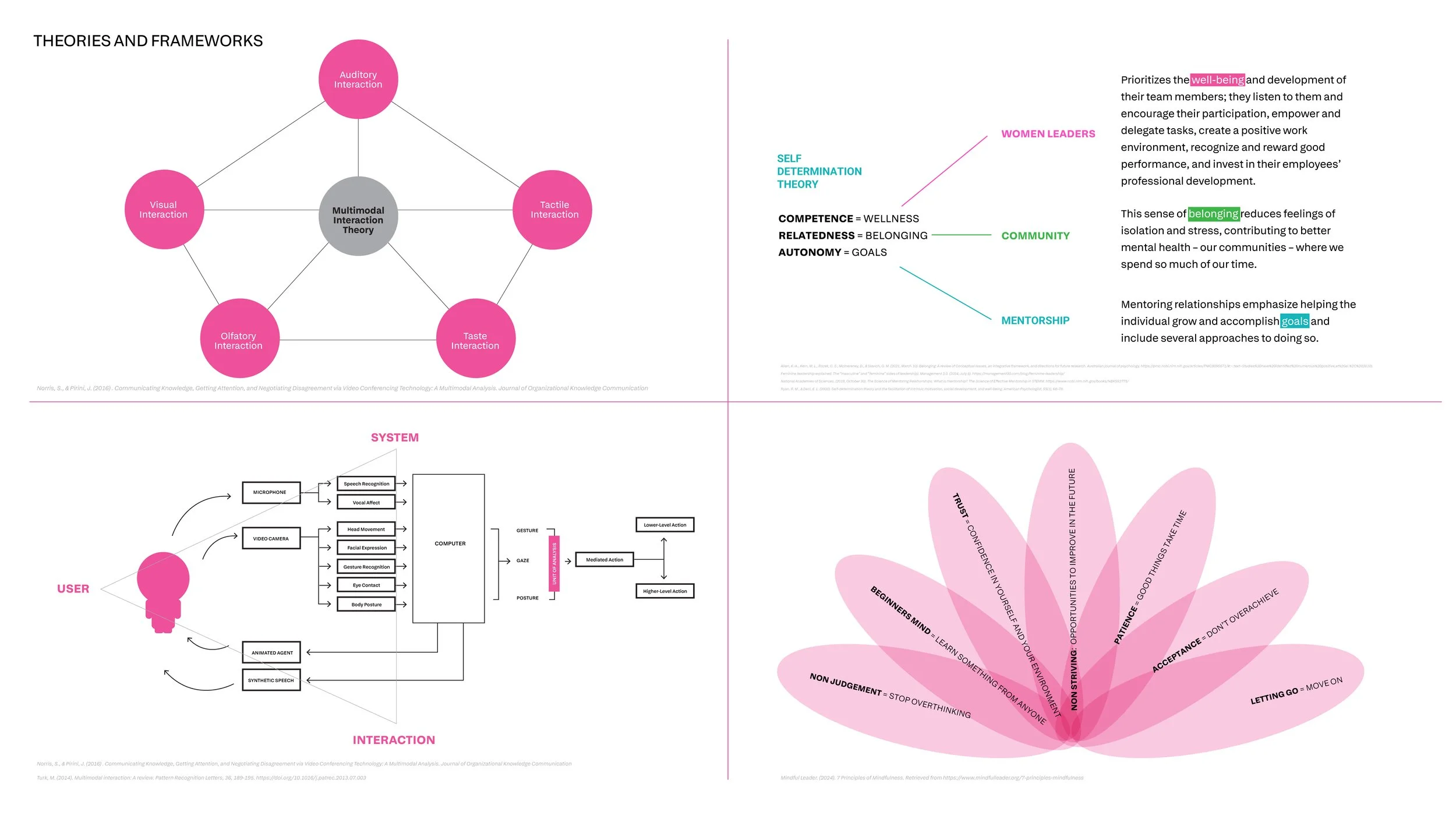
I grounded the system in:
Multimodal Interaction Theory to design beyond screens
Self-Determination Theory to support autonomy, competence, and connection
Mindfulness principles to guide reflection and intentional action
I translated the seven mindfulness principles into design by creating seven initial prototypes, each exploring how a principle could become an interaction or experience.
This allowed me to move beyond theory and test mindfulness through design, challenging assumptions and identifying what felt meaningful in the context of remote leadership.
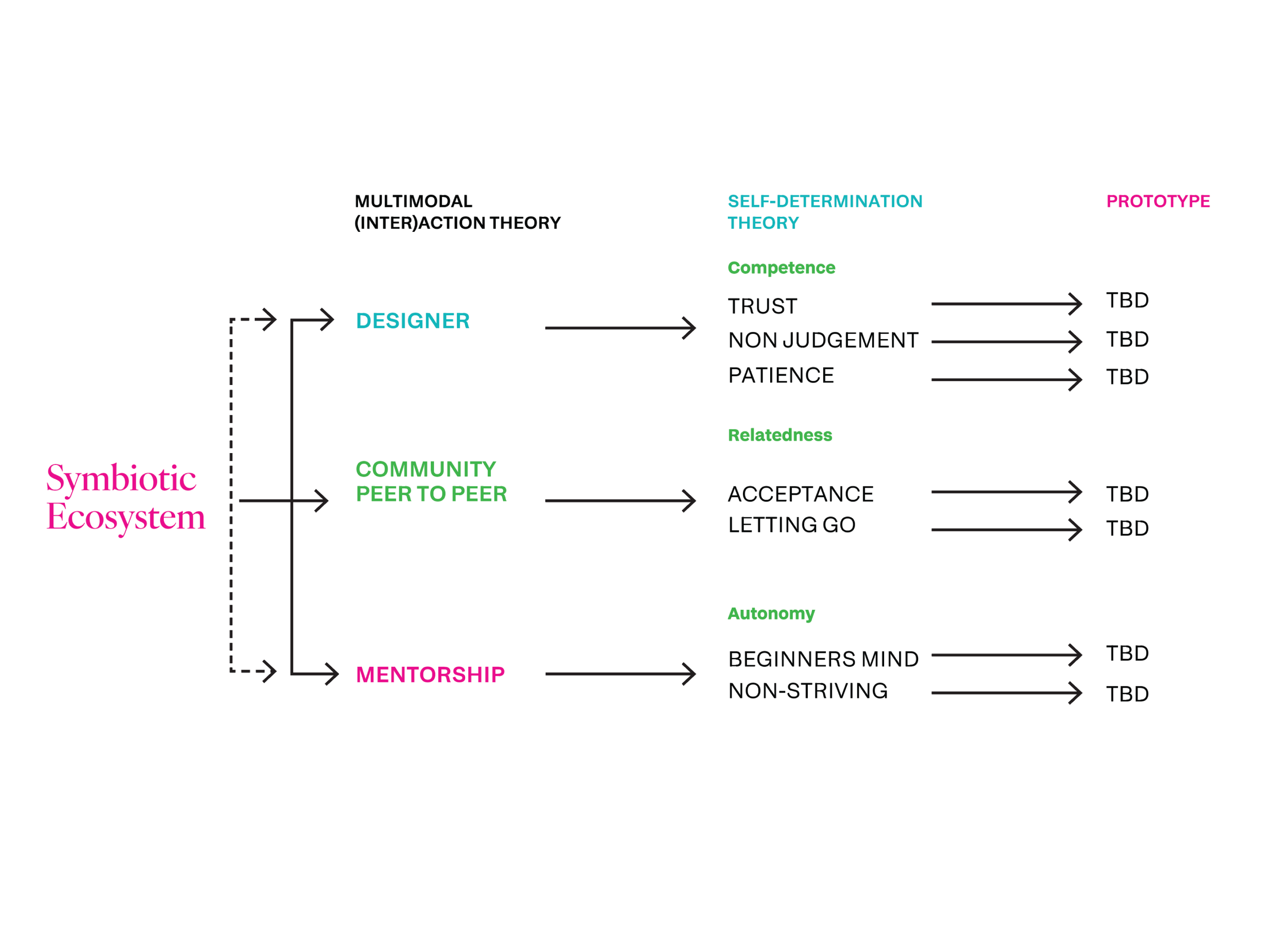
Once my frameworks were defined, I needed to understand the barriers that women face in the workspace so I could start prototyping!
I conducted interviews, and with that information, I created two personas and two user journeys.
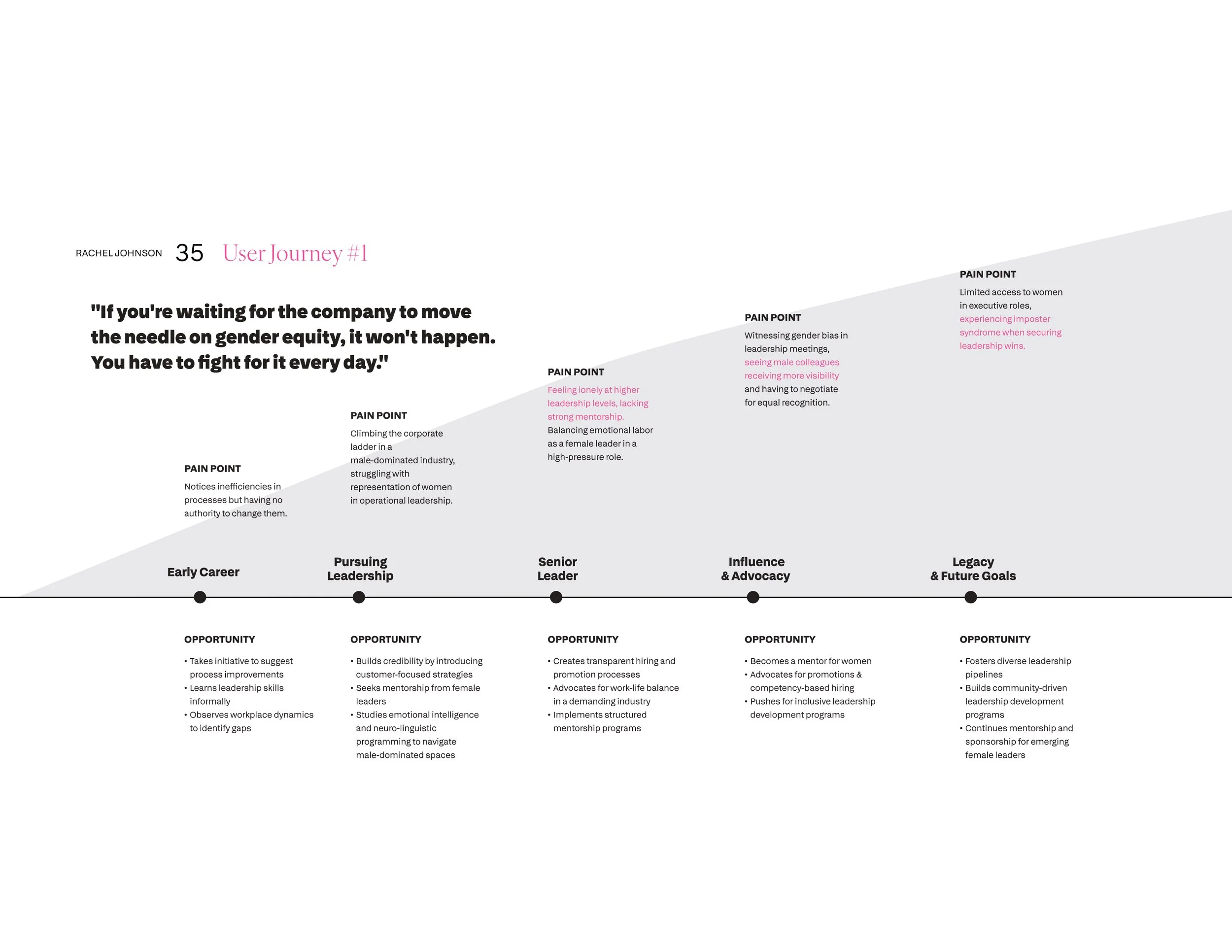
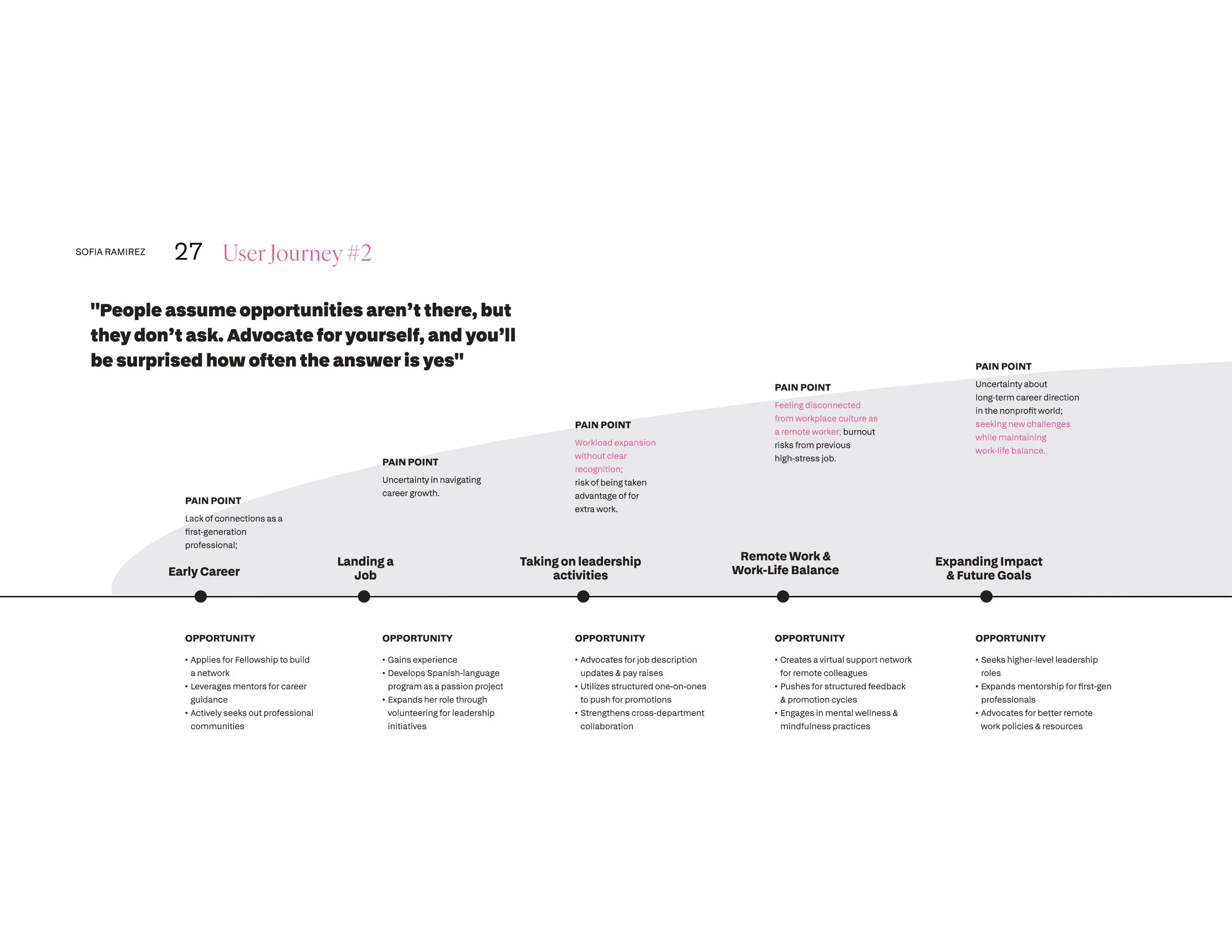
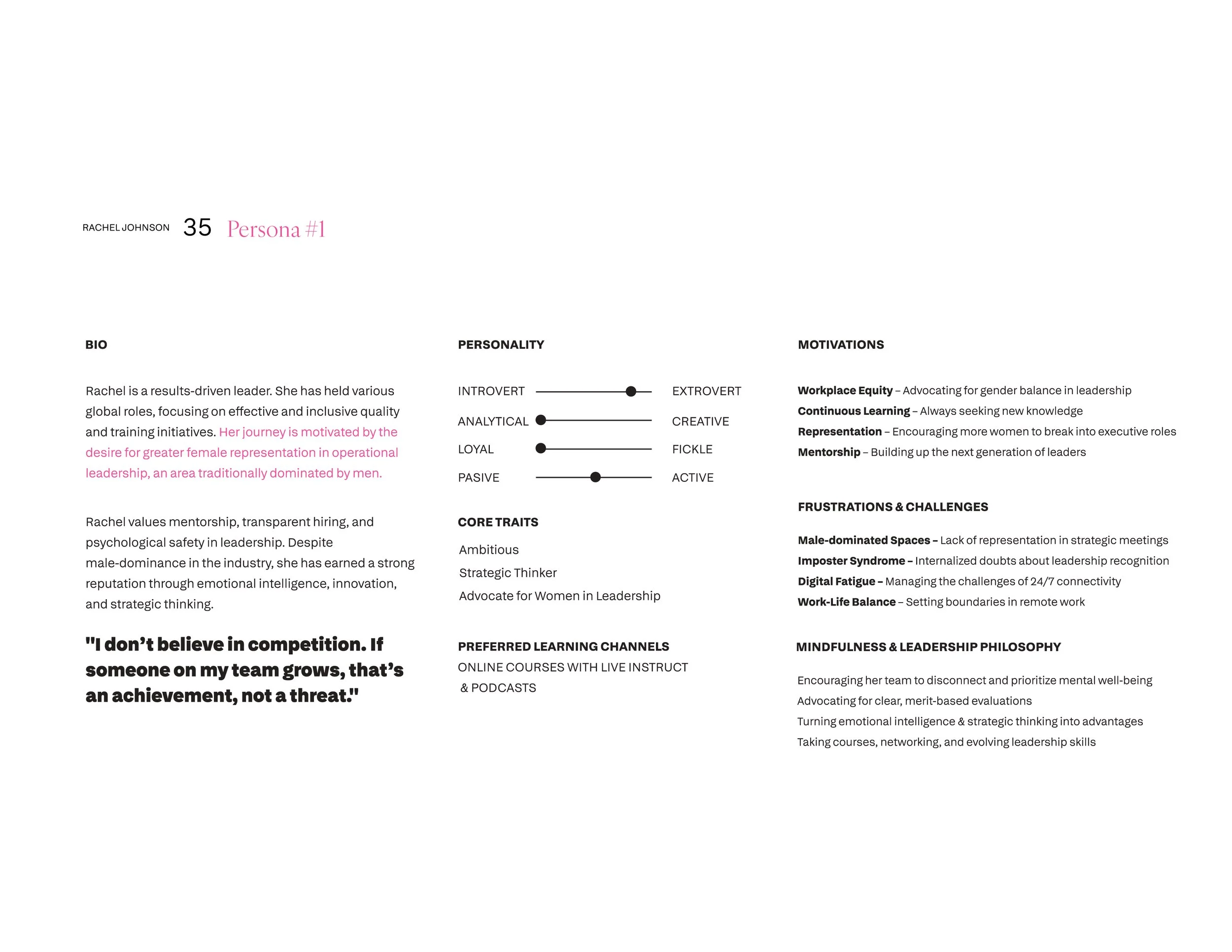
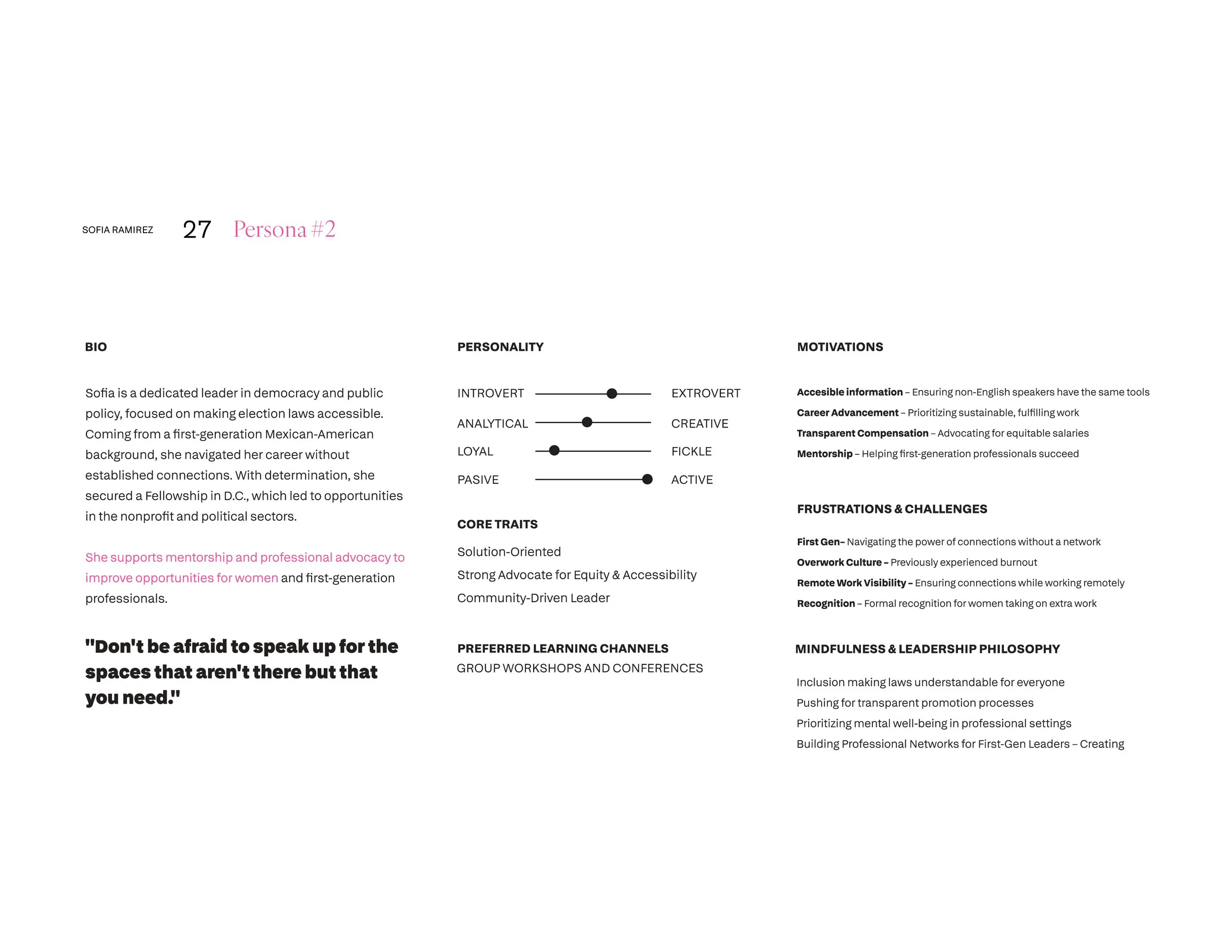
The research methods allowed me to identify the following barriers: Lack of Security, Burnout, Digital Fatigue, Loneliness, Unhealthy Competition, Imposter Syndrome, and Transparent Feedback.
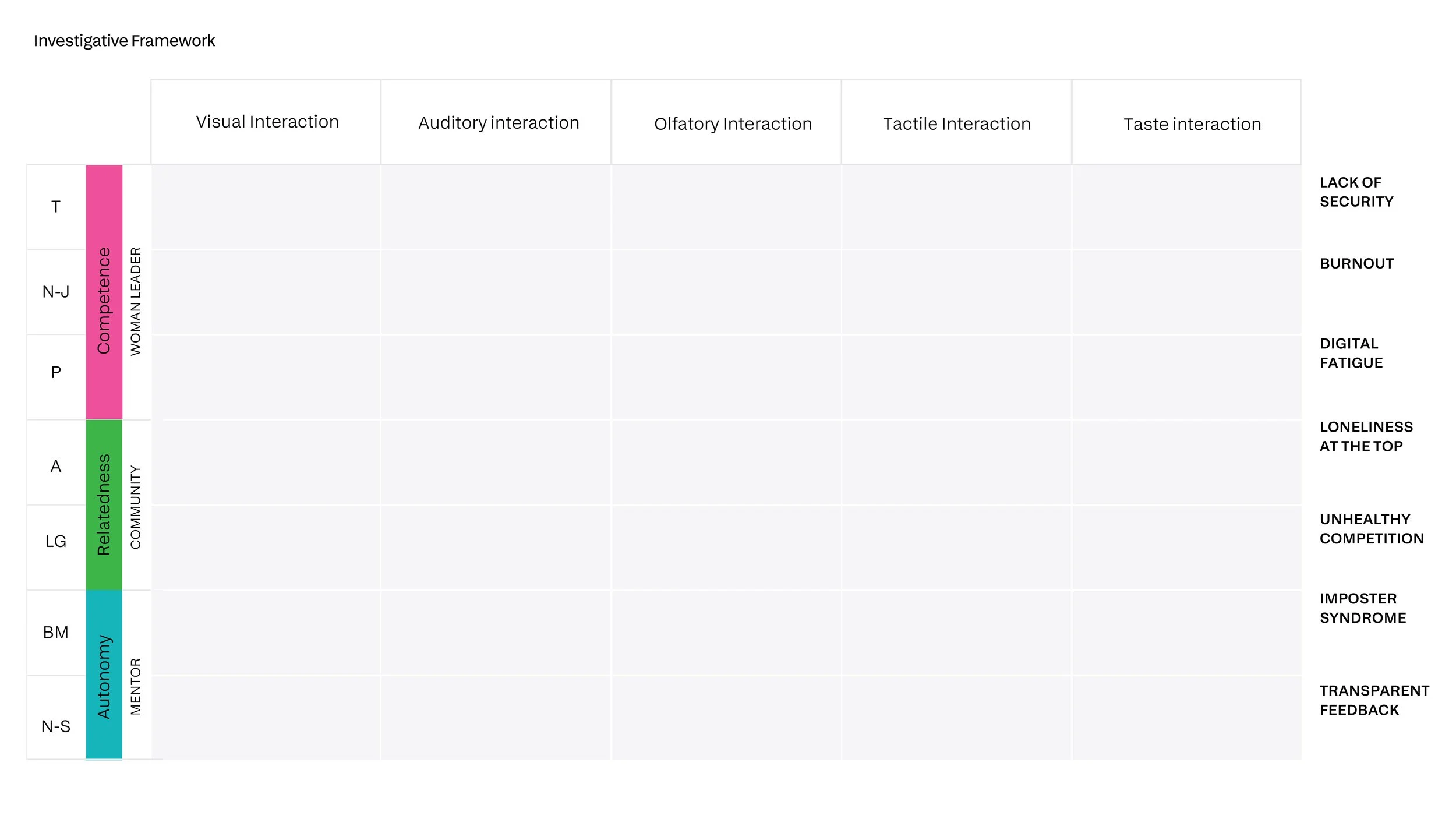
I created seven different prototypes based on the seven principles of mindfulness and the seven barriers that I discovered through my research methods.
Rapid prototyping helped me test:
Mindfulness translated into interaction
Supportive vs. Overwhelming
Reflection into daily routines integration
💭 A key insight:
Support for women in leadership must be embedded into everyday experiences—not added as another task.
Practice, not just information
Integrated, low-effort experiences
Multisensory interaction (visual, sound, touch)
Technology as guidance, not pressure

The project evolved from screen-based solutions to a multisensory experience.
Through real-world exploration (yoga, sound baths, guided reflection), I expanded the system to include:
Voice and sound | Pacing and atmosphere | Tactile and environmental cues
The goal shifted from delivering information to creating a system that users can feel, not just see.
🧘🏻♀️ The Final Outcome
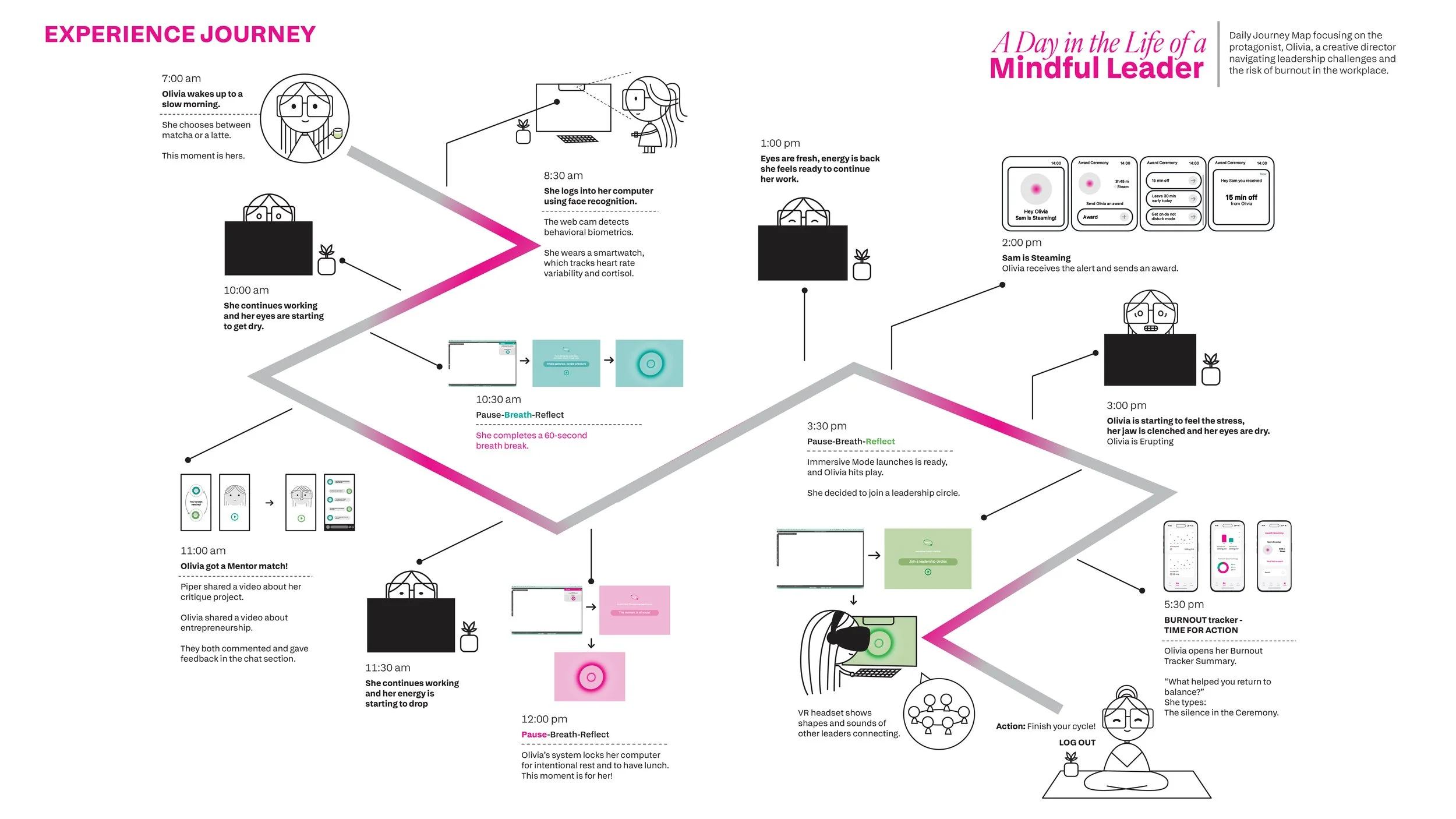
I created a user journey map to define and also for me to understand how users interact with the system across different moments of their day.
This allowed me to:
Identify key touchpoints and transitions
Understand how digital and physical interactions connect
Ensure the experience feels seamless, not fragmented
The result is a flow that supports users throughout their day, rather than in isolated interactions.
Through iteration and reframing, the project evolved from isolated concepts into a
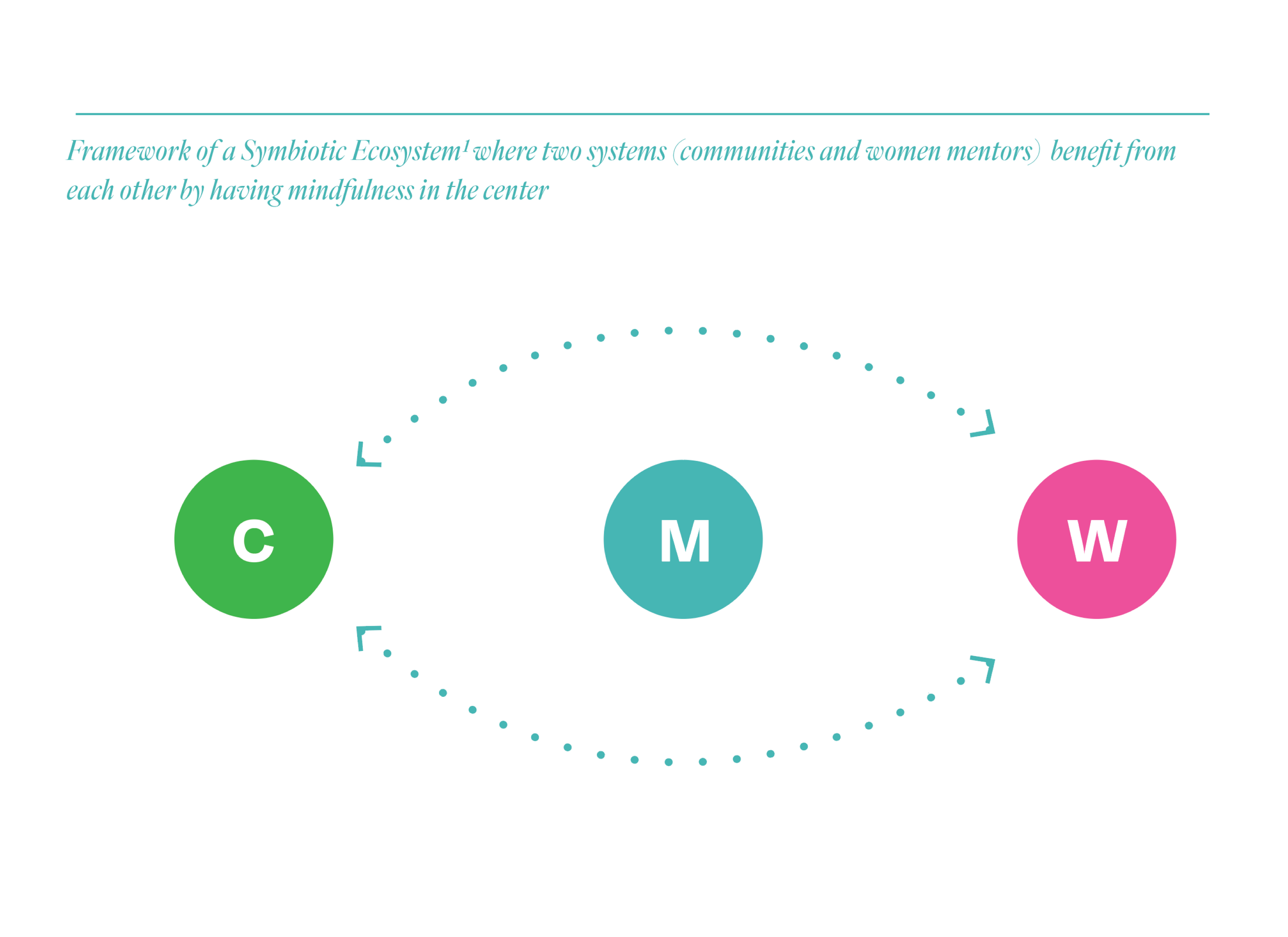
cohesive mindful ecosystem→ designed to support women in leadership in a more sustainable way.
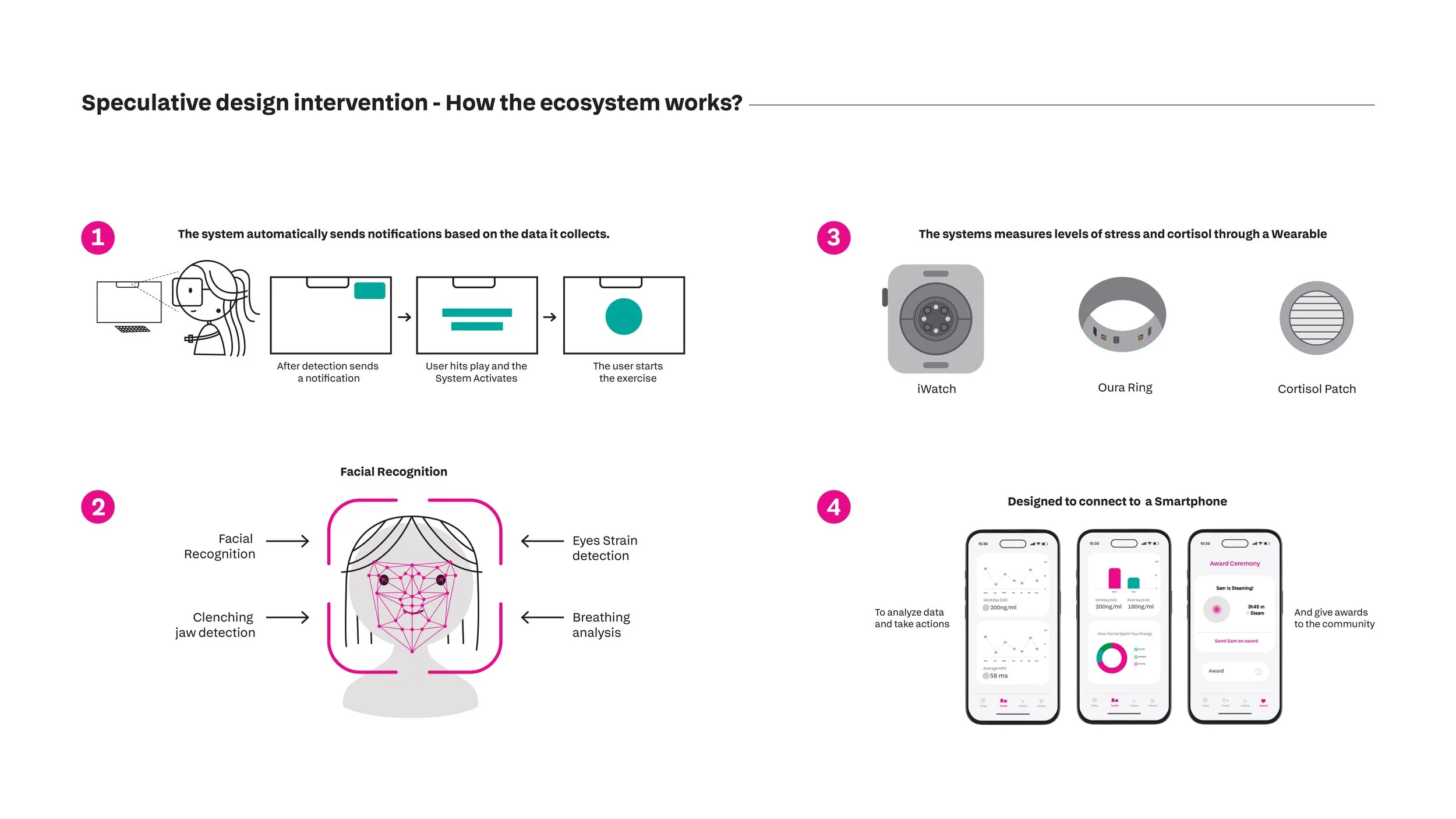
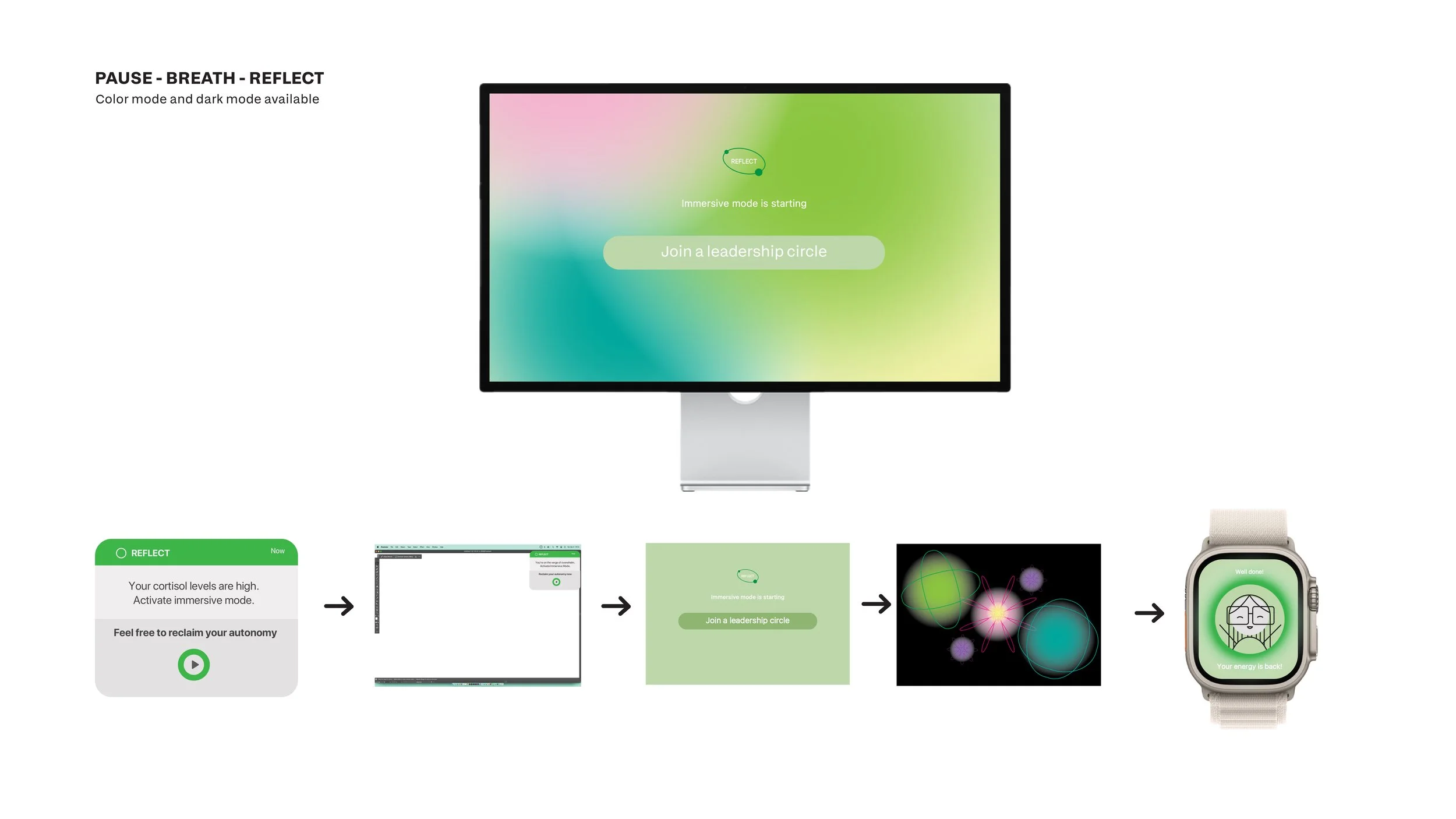
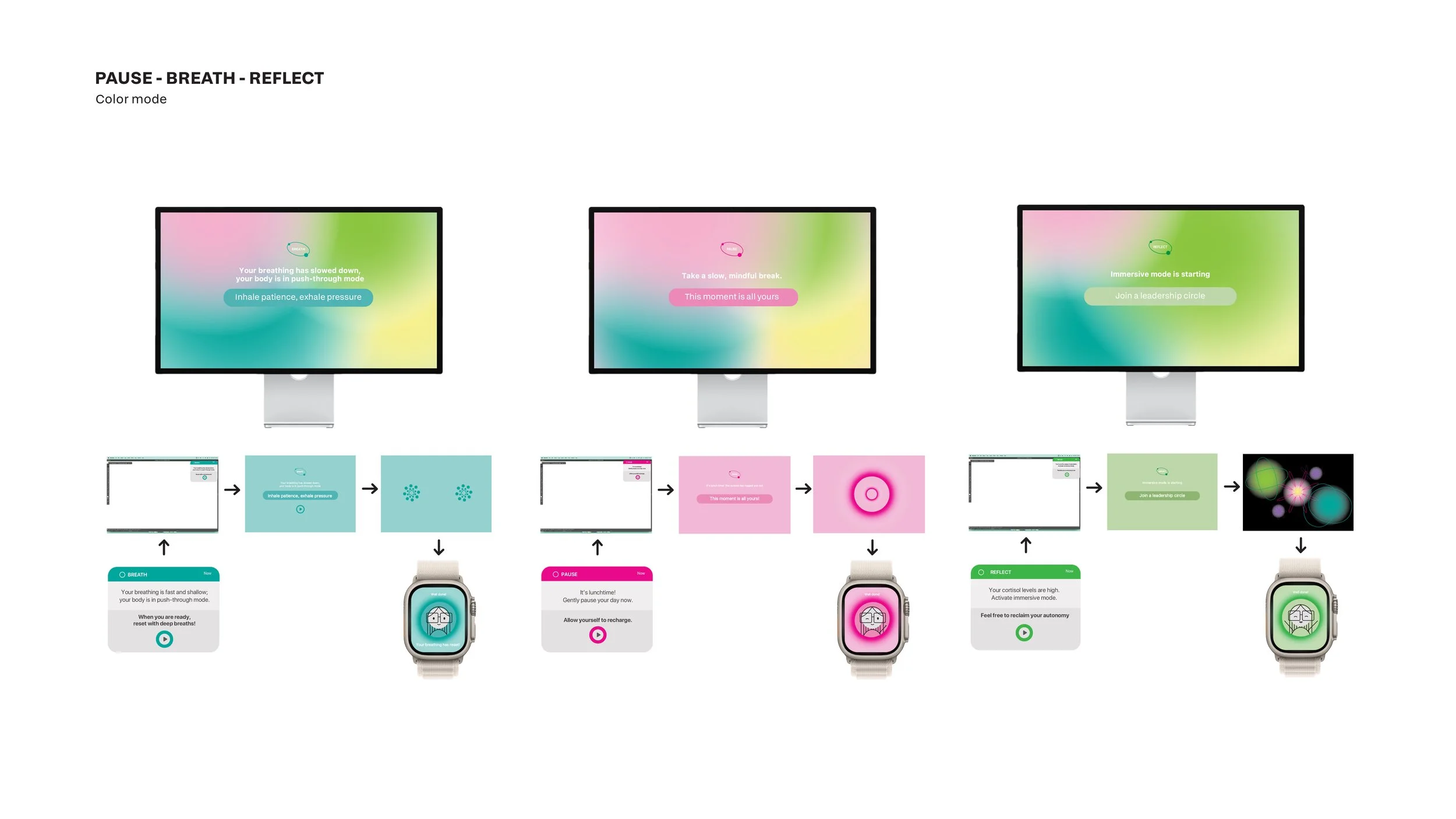
I designed the system to move beyond a traditional interface and feel more like a guided, mindful experience.
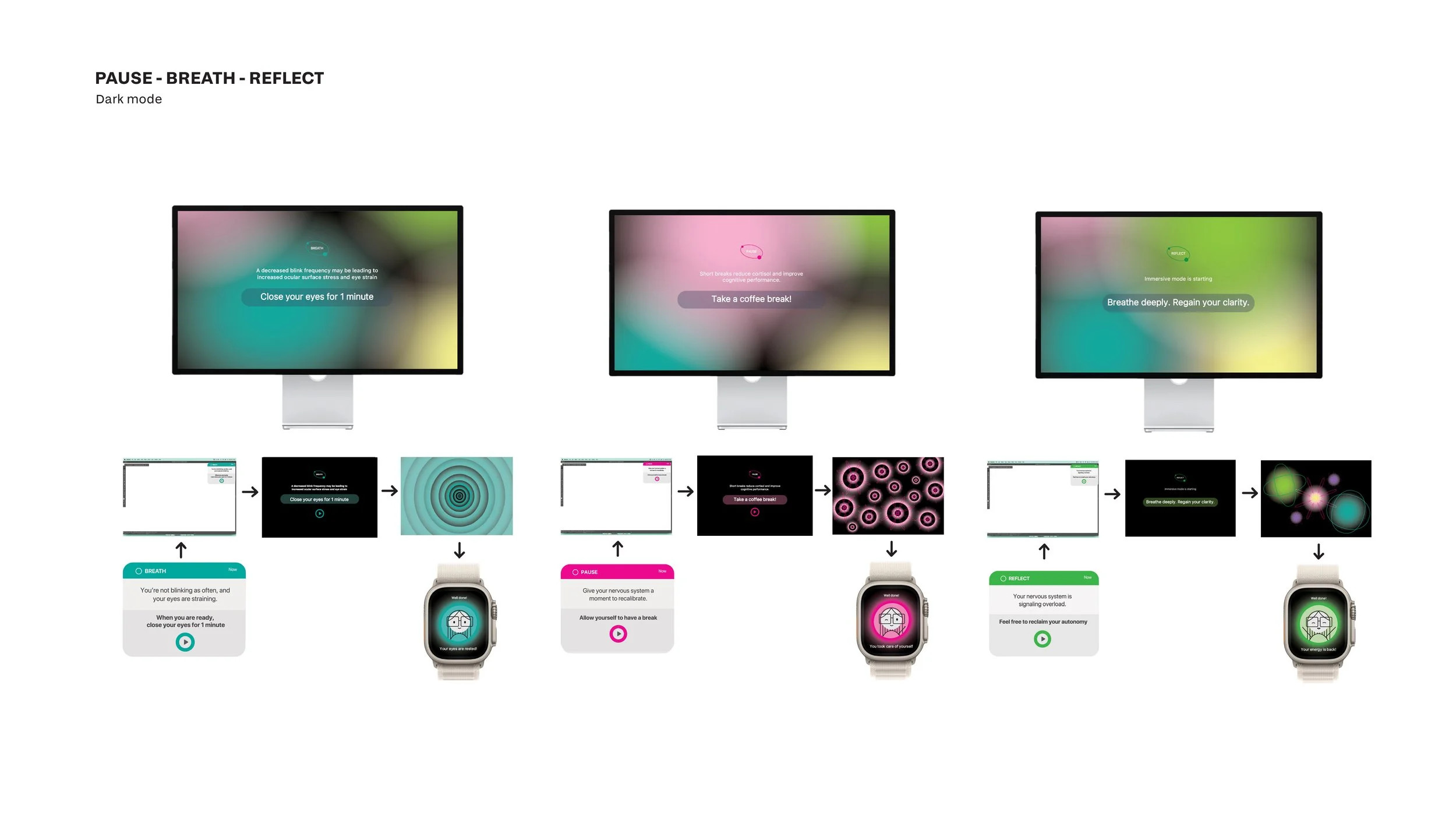
After attending yoga and sound bath sessions, I translated those interactions into the system’s voice and behavior. Instead of directive or task-based language, the system speaks like an instructor, using cues such as “when you are ready” or “allow yourself to…”.
This decision shifts the experience from control to permission, reducing pressure and encouraging reflection rather than urgency.
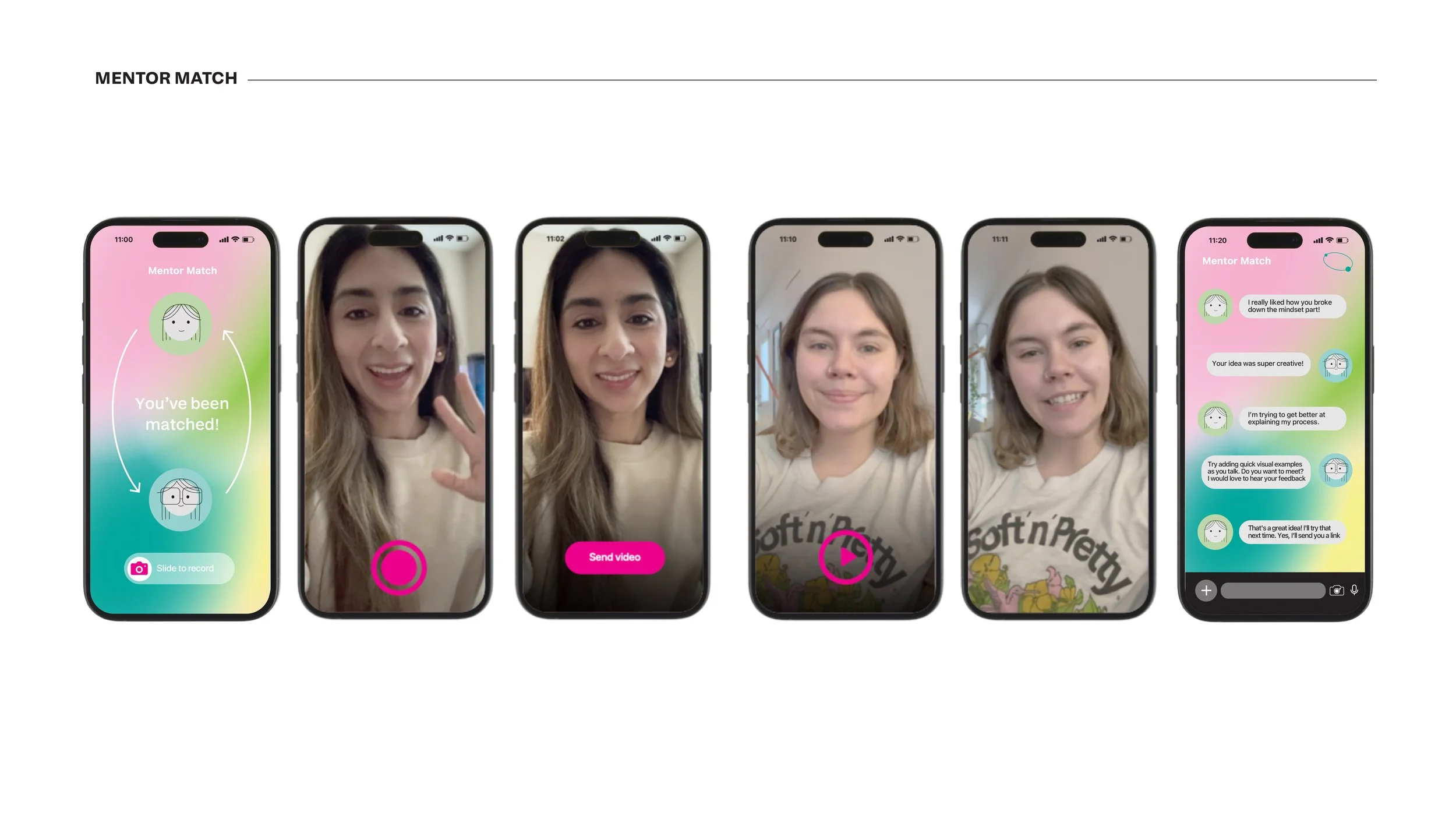
I also connected the system to personalization, mentorship, and community, ensuring that support is not isolated. Users are guided not only through individual reflection, but also through opportunities to grow, connect, and be supported by others.
These decisions led to a system that feels integrated, human, and sustainable, where leadership is supported through continuous guidance rather than one-time interventions.
RESULTS:
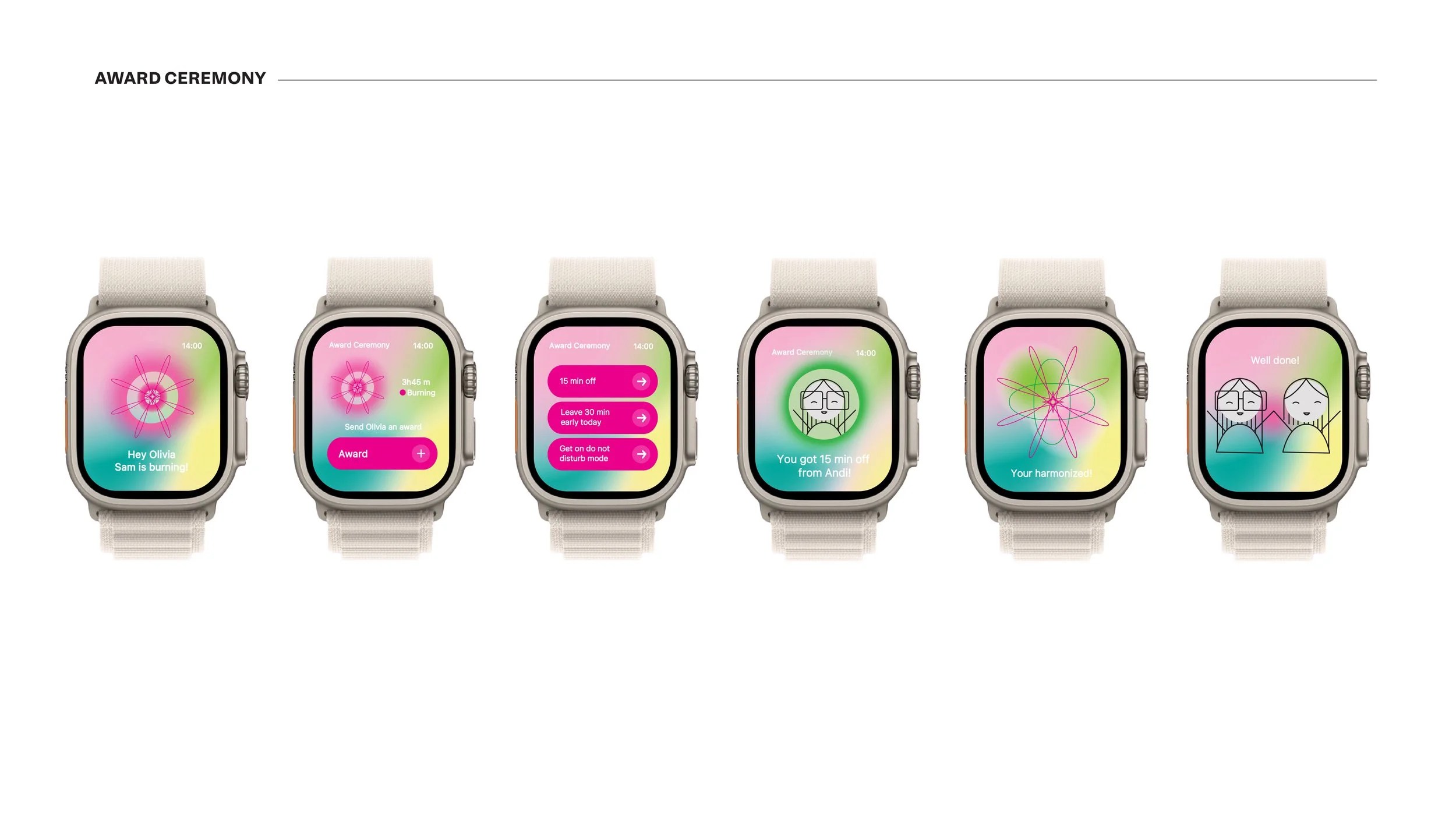
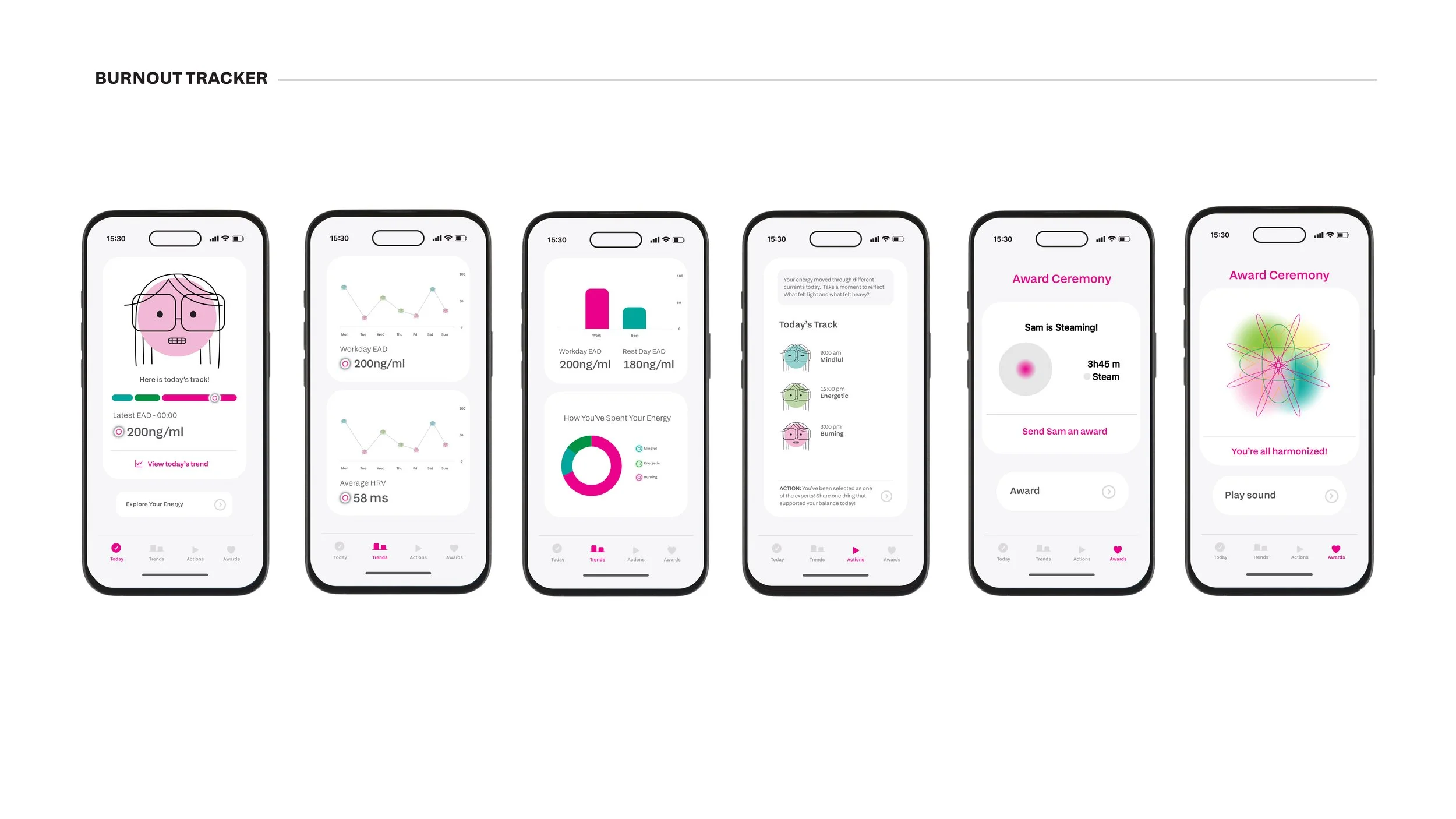
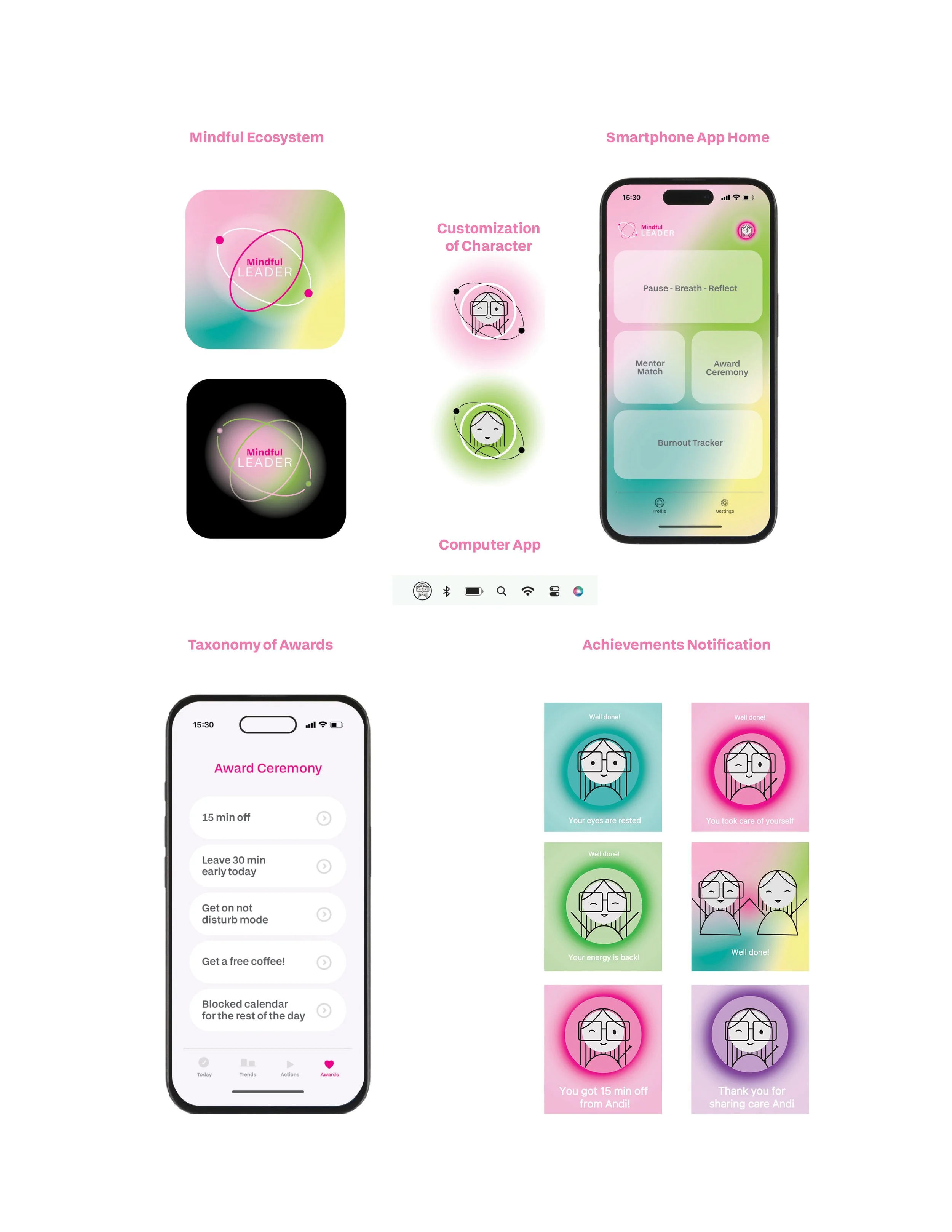
Rapid prototyping shaped the final ecosystem. Based on feedback, I refined the visual language, replacing an initial drop symbol that was misinterpreted with a more personalized representation of the user.
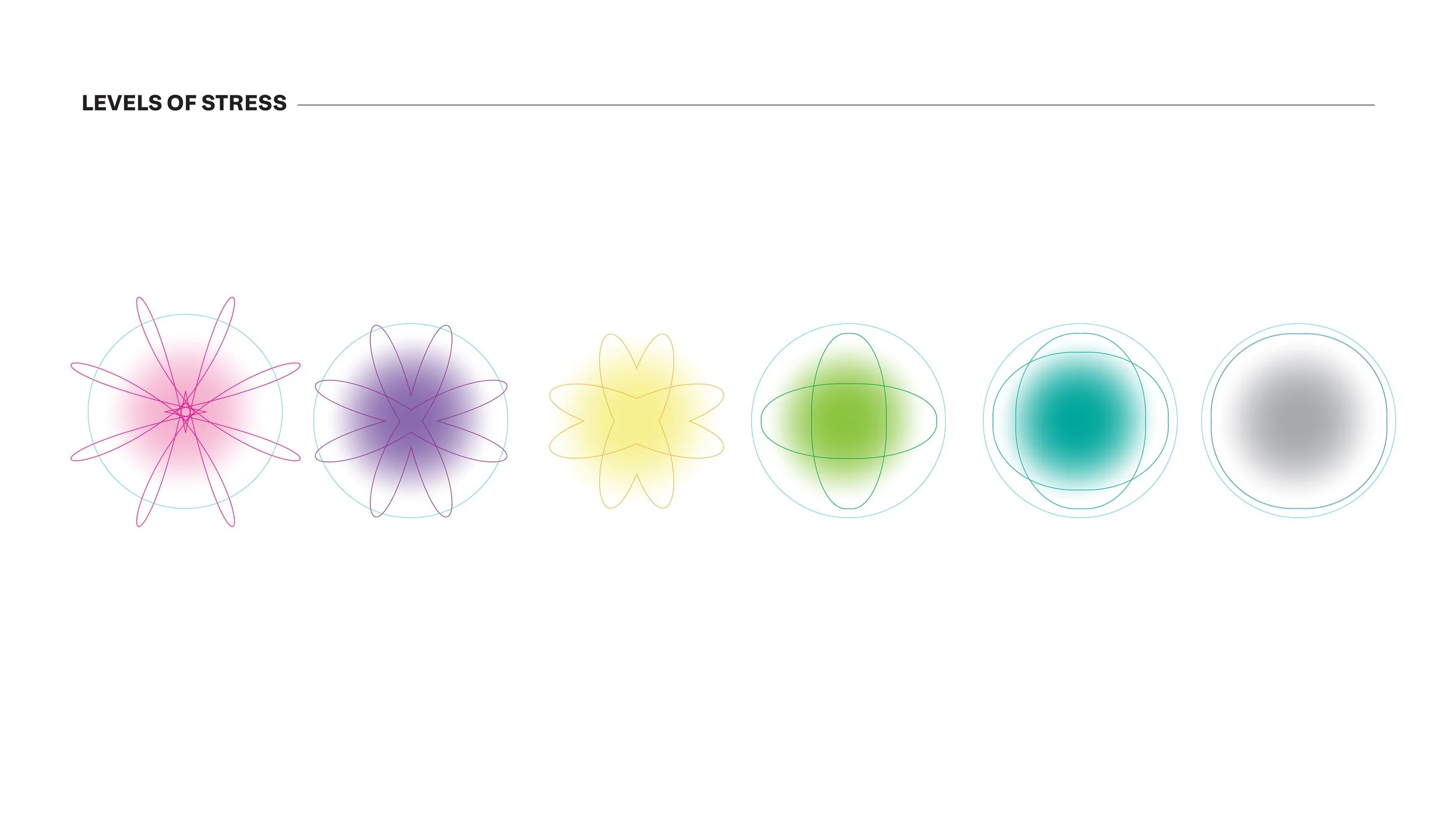
The interface adapts through light and dark modes to reflect stress levels, shifting the narrative from stress as something negative to something that requires care and attention. As stress increases, the shapes become more complex and visually rich, reinforcing the need for support from the individual, community, and mentors.
-
There is still so much I would refine and expand in this project, and many areas I’m proud of. This work marks the beginning of how I approach design through the lens of wellness and support for women.
More than a final solution, it opens a conversation. A conversation about how design can care for people, support leadership, and create space for more sustainable ways of working.
I really want to learn vibe coding to start coding and prototype more! But that is a conversation for another day 🤭!